

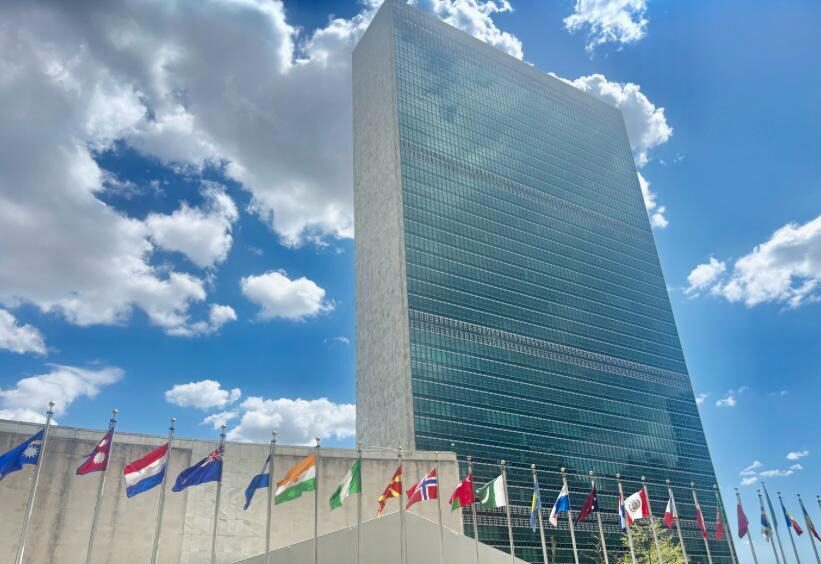
Kathmandu. Throughout the last week, the weather in New York was cold. Drizzle rain, strong winds and cold weather. This was not the expected weather of September. In the past years, the weather was not like it is now. According to the experiencer, such weather used to happen only in November, not so soon.
So the participants who went to the General Assembly in the first place were feeling different this time, some of them were even looking for new clothes. Some were also interpreting it as an effect of climate change. And they were saying that when they come to New York in the coming years, it will feel different from year to year. Maybe, in the coming years, it will be even colder and maybe in a few years, it will also snow in the same season.
With this weather of this year in New York, I remembered Nepal two years ago. The weather of the beginning of the second week of September two years ago. Talking about the weather in Nepal, September is the time to store paddy. But the weather is like the month of Saun. Two years ago, when I was in New York for reporting for the General Assembly, on September 11 and 12, there was a spontaneous rain and a big flood and landslide in Nepal. More than 200 people died due to this.
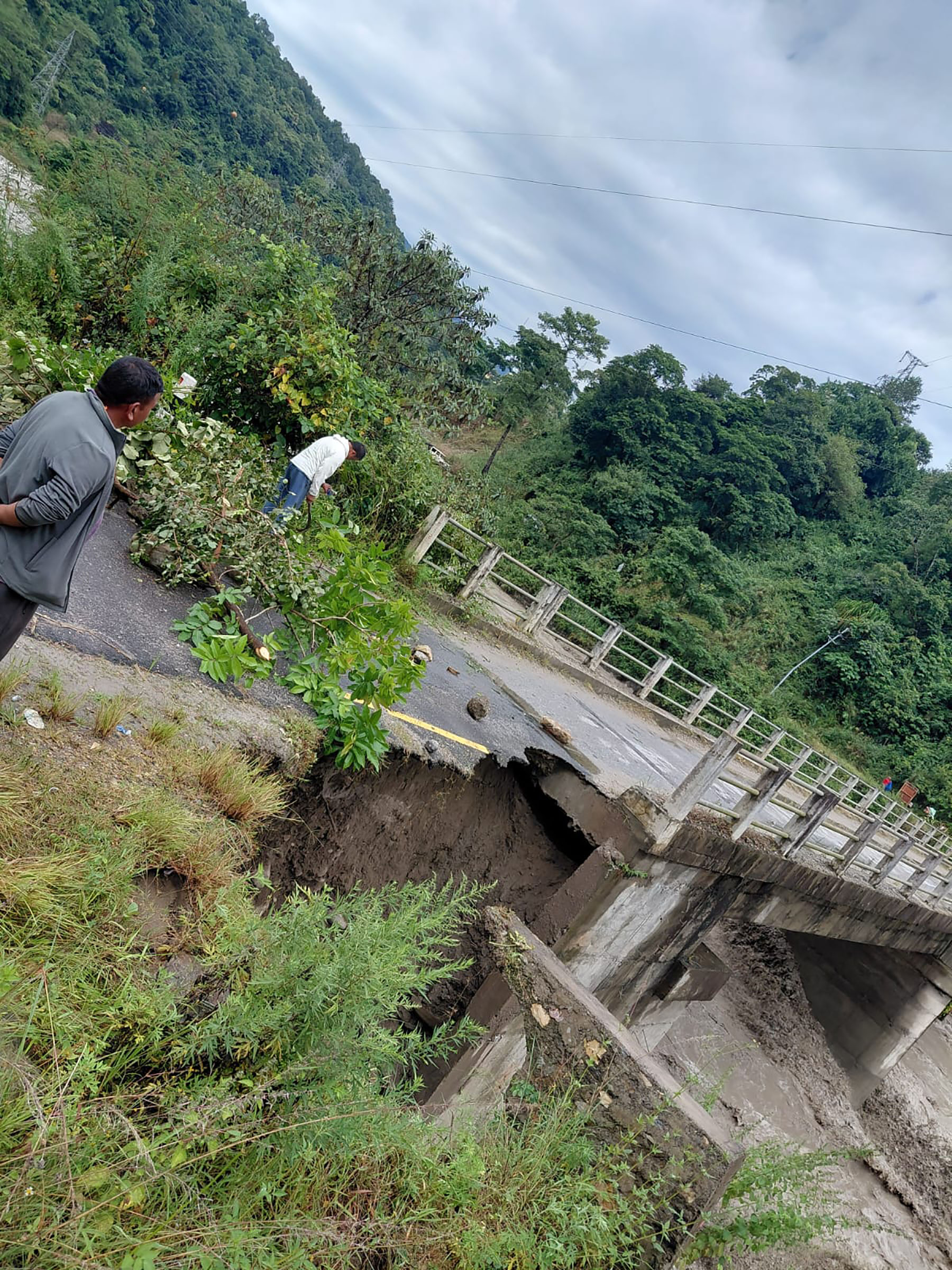
The situation is the same this year as well. In Nepal, more than 24 people have died this season as well, while the road connectivity in western Nepal has been cut off. On the eve of Dashain, the roads have collapsed in many places, making it very difficult for the citizens to commute. Let’s not talk about the Bhotekoshi floods on August 10.
According to the weather outside, there was a lot of talk about climate change in the General Assembly this time too. Around the headquarters of the United Nations, important people from about 200 countries of the world, from heads of government to heads of state, foreign ministers, diplomats to campaigners advocating for climate justice, debated in the field of climate change, its impact and impact.
US President Donald Trump, British Prime Minister Andy Branheim, Israeli Prime Minister Benjamin Nyattanyayo, Ukrainian President Volodymyr Zelenskyy and Japanese Prime Minister Sanei Takachi attended the event.
UN Secretary-General Antonio Guterres has focused on climate change, war, poverty and artificial intelligence in his address this time. Guterres, who has led the UN for 10 years of his life, has had some of his dissatisfaction in his speeches, press conferences and bilateral meetings.
Because due to the war worldwide, the supply chain is becoming difficult, due to which problems like price rise and malnutrition have increased. The number of citizens trapped in the cycle of poverty in the world is increasing drastically.
On the other hand, he also says that he has focused on the problems caused by climate change in the world and the suffering of the citizens. Recalling his visit to Nepal three years ago, he said, “Three years ago, I stood in Nepal where the highest peak Mount Everest is located and said that the roof of the world is collapsing. But people said that it was exaggerated. I had told the world that it should focus on studying the impact of climate change at that time, but the world is not yet ready to do it today.” ”
Secretary-General Guterres also made it clear that the world has seen the recent loss of life and property in Nepal due to climate change. His statement was aimed at the issue of the floods of August 10 and the unimaginable human, physical and infrastructure damage caused by it. His statement was important because scientific studies, available evidence, and data had made it clear to him how severe the effects of climate change can be.
In particular, the global war, the threat of nuclear weapons, the extreme situation of poverty, the world being trapped in the climate crisis, the rapid expansion of information technology, nuclear disarmament, the Sustainable Development Goals, etc., were explained in their own way by the heads of government of the world. The neighboring country Bangladesh was more focused on the Rohingya refugees than other issues, while the African countries took up the participation of the Security Council.
On the other hand, the US President, who arrived on the first day of the high-level political debate, not only spoke about America’s power in the world, but also expressed strong anger about the Iran-US war in the recent days. His speech was more about conflict. In his speech, neither the issue of climate change as General Secretary Guterres was concerned, nor did it raise the impact of sea level rise that the world will face in the near future.
Nepal’s participation and activism
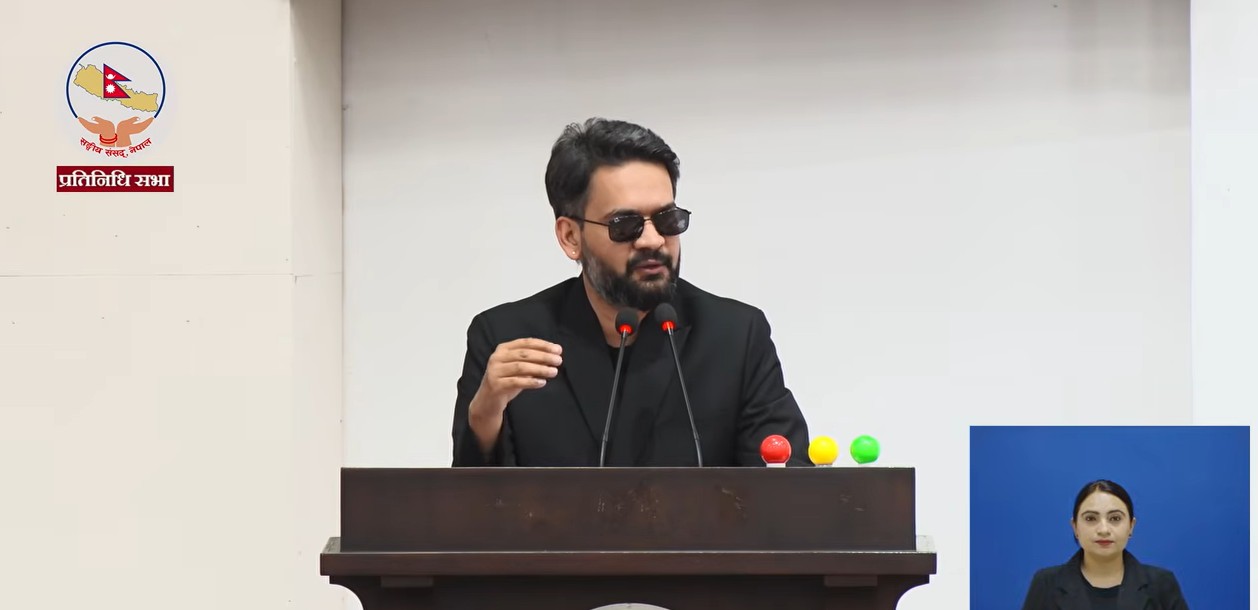
In this general assembly, Prime Minister Balendra Shah raised the issue of climate change with high priority and also clearly put the situation of climate-related disaster faced by Nepal in the world forum. This not only reflected the situation of the impact of climate change that Nepal has faced unnecessarily on the world stage, but our problems and compulsions have also come out once again. Nepal’s appeal for climate justice reached the world again. Which also forced the world community to think about us and provoked it.
Prime Minister Shah pointed out that Nepal contributes 0.1 percent of green gas emissions, which is considered an important part of climate change, but its impact is seriously suffering. He also made it clear that Nepal cannot bear the burden of mobilizing climate finance under climate justice and loan in the form of compensation grant for loss and loss.
This time, Nepal’s presentation has further exposed the fact that the developed countries of the world are not working according to their commitments. Another important aspect is that as Secretary-General Guterres said, every member state has to work according to its commitments.
Prime Minister Shah also said that the climate crisis should be tackled through a common mechanism of the world’s most populous South Asian countries. It can be expected that this will put more pressure on countries around the world to take urgent and emergency decisions.
Nepal, as in its traditional form, gave importance to bilateral meetings, multilateral participation and sideline meetings. Foreign Minister Shishir Khanal, Foreign Secretary Amrit Bahadur Rai, Chief of the UN Mission in New York, Lok Bahadur Thapa and other officials were active and busy.
People gathered in New York from all over the world seemed to be interested, as the climate has been a direct experience of Nepal.
Expectations and Future
Now the rich countries of the world are more focused on how to make a leap in artificial intelligence than climate change. They are more worried about whether they will succeed in putting technology in the human bus. That’s why while the leaders of countries from all over the world were debating in New York, the presidents of the world superpower America and China, which is struggling as a rising power, were busy discussing their agendas in Washington DC.
At the same time, the countries of the world have also realized that it is not possible for only one or two countries to face the challenges of the world in the coming days. The time has come to find a common solution to the problems in the world through a multilateral and multipolar system. Therefore, the earth is a common home in which eight billion people live. The main challenge for them is to have easy access to the minimum necessities goods and services.
On the other hand, if artificial intelligence has to face complex diseases, extreme conditions of unemployment or starvation in the future, how can the Union work by taking its member countries into confidence? For this, the United Nations should take the initiative to work according to the plan of all the existing problems and the countries of the world will have to do the same.
Human beings are naturally suffering from the psychology of considering the crisis in front of their eyes as a crisis. If the impact of climate change causes floods and landslides in Nepal four weeks ago, if the sea level rises and submerges the lower coast of New York within the next two to three decades, or if there is heavy snowfall around the General Assembly building and the General Assembly has to be adjourned.
Therefore, if the countries that reduce green gas emissions can unite and create immense pressure in the General Assembly in the upcoming General Assembly, then landlocked, underdeveloped and underdeveloped countries around the world, including Nepal, can achieve climate justice. If Nepal can lead the country that is facing nature and injustice like Nepal, then it will definitely be a fragrance of gold.
RSS












प्रतिक्रिया दिनुहोस्