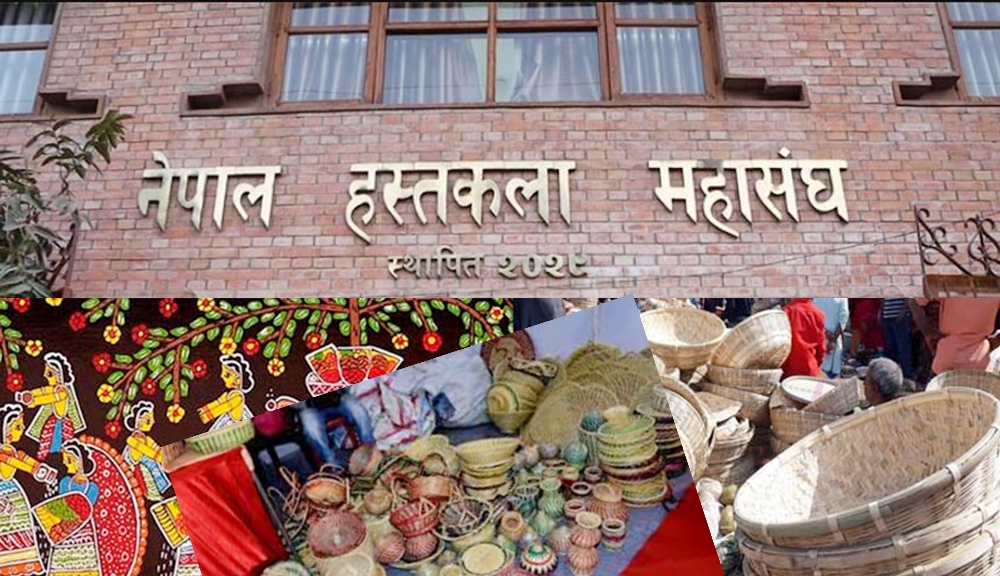
Kathmandu. KATHMANDU: The Federation of Handicraft Associations of Nepal (FHAN) has said that the budget for the coming fiscal year has been positive.
Issuing a press release today, Acting President of FNCCI Rajman Bajracharya said that the budget for the coming fiscal year 2083/84 will encourage the domestic industry and handicraft sector.TAG_OPEN_div_22
The FNCCI has welcomed the budget, saying it has given priority to economic reforms, promotion of the private sector and simplification of the tax system. The budget has taken the issue of reducing customs duty on 273 types of industrial raw materials and scrapping excise duty on 360 items.
“We believe that the efforts to maintain a balance between the tax rate of raw materials and finished goods will reduce the production cost of domestic industries and increase exports,” the federation said in a statement.TAG_OPEN_div_18
Similarly, the reduction in the maximum income tax rate from 39 percent to 29 percent and bringing those earning up to Rs 1 million annually under the ambit of low tax are expected to benefit the micro, small and medium enterprises in the handicraft sector.TAG_OPEN_div_16 According to the Federation, the provision of concessional loan mentioned in the budget will encourage a large number of women entrepreneurs involved in the handicraft sector. Similarly, the budget policy to encourage domestic timber industry will facilitate the supply of raw materials in the timber sector and increase its competitiveness in the international market.
} Similarly, announcements such as easing the process of closing companies, formulating laws related to intellectual property and continuation of cash incentives for exports have added to the enthusiasm of the industrialists. The budget is expected to support the ‘Make in Nepal’ and ‘Made in Nepal’ campaigns. According to the federation, 36 categories of handicraft products and around 83 types of goods have not been explicitly included while widening the scope of Nepal Trade Integrated Strategy.
Similarly, there is a lack of a concrete plan to transfer handicraft skills to the younger generation, a special policy for the natural fiber-based textile industry and a clear strategy for the production sector.TAG_OPEN_div_12


















प्रतिक्रिया दिनुहोस्