

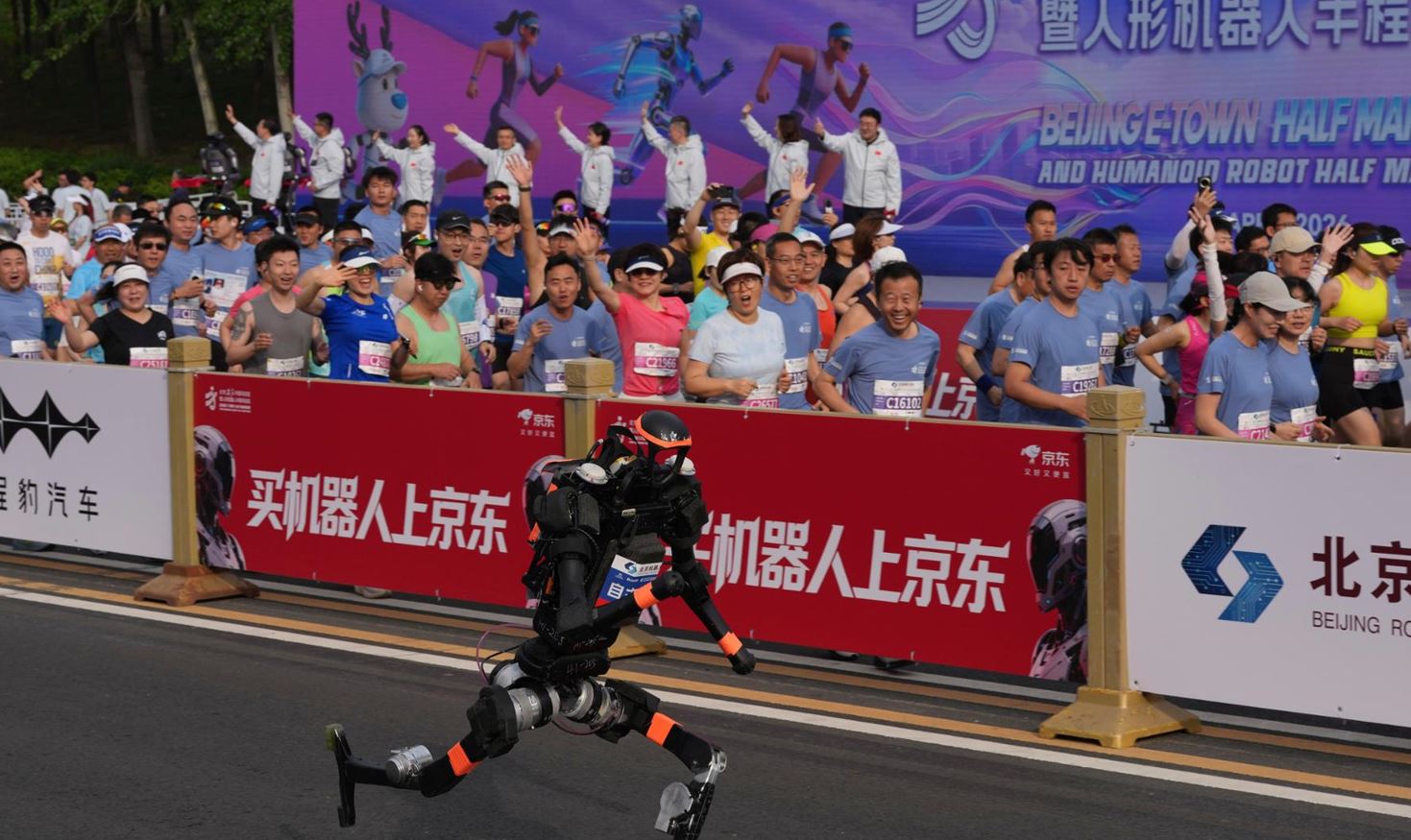
Kathmandu. A humanoid robot has made a historic breakthrough in the Beijing Half Marathon, surpassing the human world record. This achievement signals the beginning of a new era in the confluence of sports and artificial intelligence.
The robot developed by Chinese smartphone maker Honor completed the 21-km race from the Beijing Economic-Technological Development Area (Beijing E-Town) in 50 minutes and 26 seconds. This time is significantly faster than the time of 57 minutes set by the human half-marathon world record holder Jacob Kiplimo of Ugandan in March.
In this competition organized for the first time last year, the winner of this competition completed the distance in 2 hours 40 minutes and 42 seconds. In comparison, this year’s performance highlights the rapid advances in robot technology. The size of the tournament also increased significantly this time with more than 100 teams, including five foreign teams.
The race wasn’t entirely easy. Some of the robots fell off the start, while others hit obstacles. However, according to organizers, about 40 per cent of the robots were able to autonomously navigate the entire route without human intervention, while the rest were operated by remote control.
The visuals of a robot acting as a traffic policeman in the competition guided the participants with hand gestures and voice gestures caught the attention of the audience, showing the possibility of multi-dimensional use of robots.
The development of technology in China is linked not only to industrial progress but also to strategic competition. Beijing has pledged to “push the frontiers of science and technology” in its latest five-year plan, especially in response to competition with the United States. The plan for 2026 to 2030 prioritizes the development of advanced technologies such as humanoid robots.
According to a recent report by London-based technology research firm Omdia, Chinese companies such as Azibot, Unitri Robotics, and Ubitech Robotics Corp are leading the way in the production and supply of general-purpose tangible intelligent robots to the global market. These companies sent thousands of units of robots around the world last year alone, confirming China’s growing influence in the region.
This event is not just an achievement to win a race, but also signals the rapid development of artificial technology capable of competing with human potential, which is expected to have a massive impact from sports to industry in the coming days.



















प्रतिक्रिया दिनुहोस्