

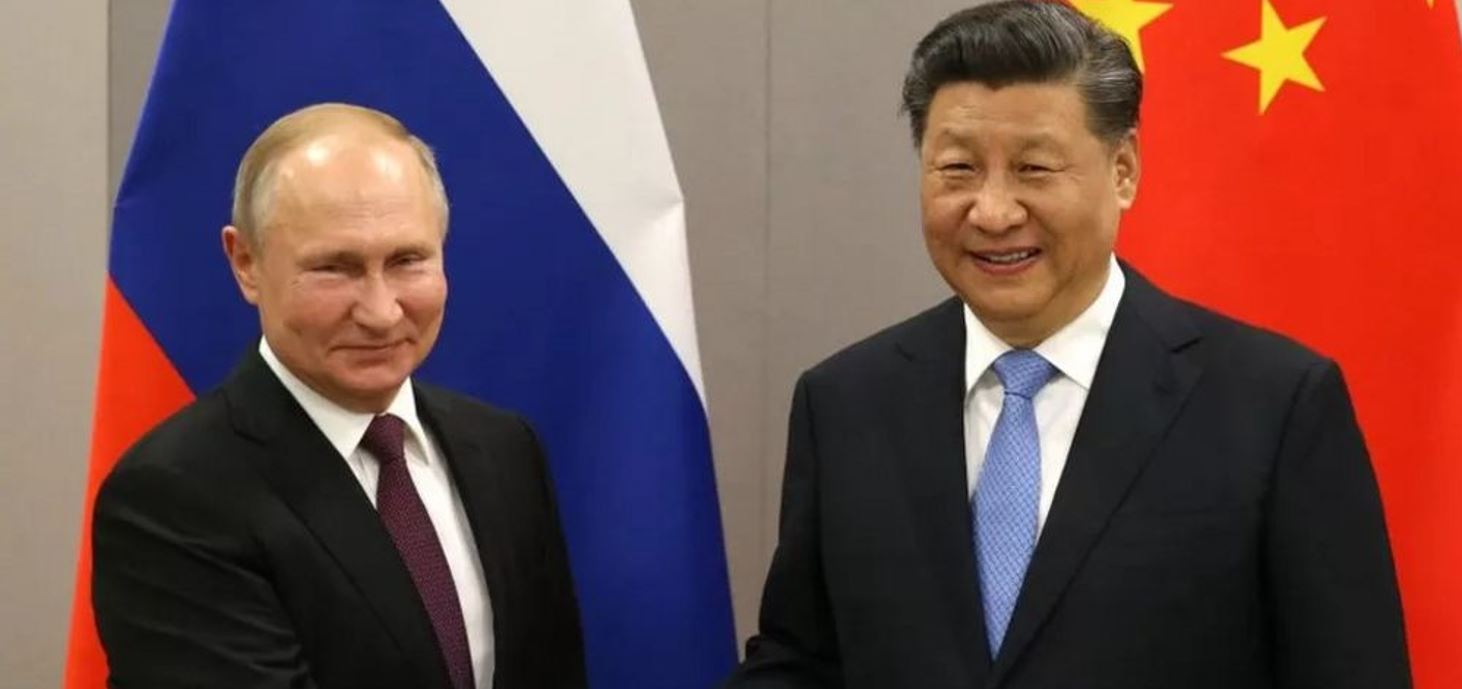
Kathmandu. Russian President Vladimir Putin arrived in Beijing just hours after US President Donald Trump’s visit to China. The meeting between the war in Ukraine, energy politics, US-China relations and tensions in the Middle East has been linked to the global balance of power.
Chinese President Xi Jinping arrived in Beijing on Tuesday for high-level talks with Chinese President Xi Jinping. According to the Kremlin, the two leaders will hold extensive discussions on strengthening the Russia-China strategic partnership, increasing coordination on international and regional issues, and building common understanding on the changing world order.
The visit assumes significance because Trump visited Beijing last week as the first U.S. president to visit China in nearly a decade. Putin’s visit to Beijing is believed to have sent a message that Moscow-Beijing relations are stronger.
After Russia invaded Ukraine in 2022, Western countries tried to isolate Moscow diplomatically and economically. Since then, Russia has become more dependent on China. In particular, the Chinese market is now a major destination for Russian oil, while Western sanctions have increased Moscow’s reliance on Beijing for economic support. Prior to the visit, the two leaders exchanged messages of best wishes on the completion of 30 years of their strategic partnership. According to Chinese state media, President Xi said that Russia-China cooperation has been continuously deepening.
In a video message to the Chinese people on Tuesday, Putin said Russia-China relations had reached an “unprecedented high”. Stating that trade between the two countries was growing rapidly, he said both the countries were working for world peace and common prosperity without forming an alliance against anyone. Putin did not name any third country in his speech, but his remarks were seen as aimed at the United States. The two leaders are expected to sign a joint declaration after the talks.
During a visit to Beijing in September, Xi gave a special welcome to Putin, calling him an “old friend”. Analysts say that while Putin’s visit has seen less public pomp than Trump’s, Sino-Russian relations do not need that kind of display.
According to Patricia Kim of the Brookings Institution in Washington, Beijing and Moscow see their relationship as more stable and structurally stronger than the US-China relationship. According to him, the two countries are now close on the basis of common strategic interests. China has repeatedly advocated for a negotiated solution to the Ukraine war since it began. But Beijing has not openly condemned Russia’s military strike. China presents itself as a neutral party.
The Ukraine war was also raised in the talks between Trump and Xi last week. But the analysis is that the US President returned from China without any concrete agreement or achievement. According to Patricia Kim, it is very likely that President Xi will give Putin a detailed briefing about his meeting with Trump. He said the unclear outcome from the Trump-Xi meeting was an assurance to Moscow that China was not compromising against its interests.
Energy cooperation is also expected to be at the center of the meeting. Trump has recently claimed that China has agreed to buy American oil. Since then, Moscow wants to strengthen energy ties with Beijing. According to Lyle Morris of the Asia Society, Putin does not want to lose China’s support because Russia is dependent on the Chinese market to sustain its war effort. According to him, Putin will also be interested in understanding China’s future strategy for the situation in the Middle East.
China and Russia may have different views, especially on tensions between the US, Israel and Iran. According to James Char of Nanyang Technological University in Singapore, China wants key sea lanes open for global trade and energy supplies, and wants the tension over the Strait of Hormuz to end quickly. Moscow, on the other hand, has been reaping economic benefits from rising energy prices due to the conflict with Iran. Russia is said to be in a different strategic position as demand for Russian energy exports has increased despite Western sanctions.
After a meeting with Xi in April, Russian Foreign Minister Sergei Lavrov said Russia could supply China’s energy shortage if global supply was unstable. According to Joseph Webster of the Atlantic Council, energy cooperation is likely to be a major agenda at this meeting. He said Moscow was also interested in expanding oil exports to the east as China seeks more Russian energy and Ukraine continues to attack Russian energy infrastructure.
















प्रतिक्रिया दिनुहोस्