Skip to content

Japanese yen hits 40-year low due to tensions in the Middle East

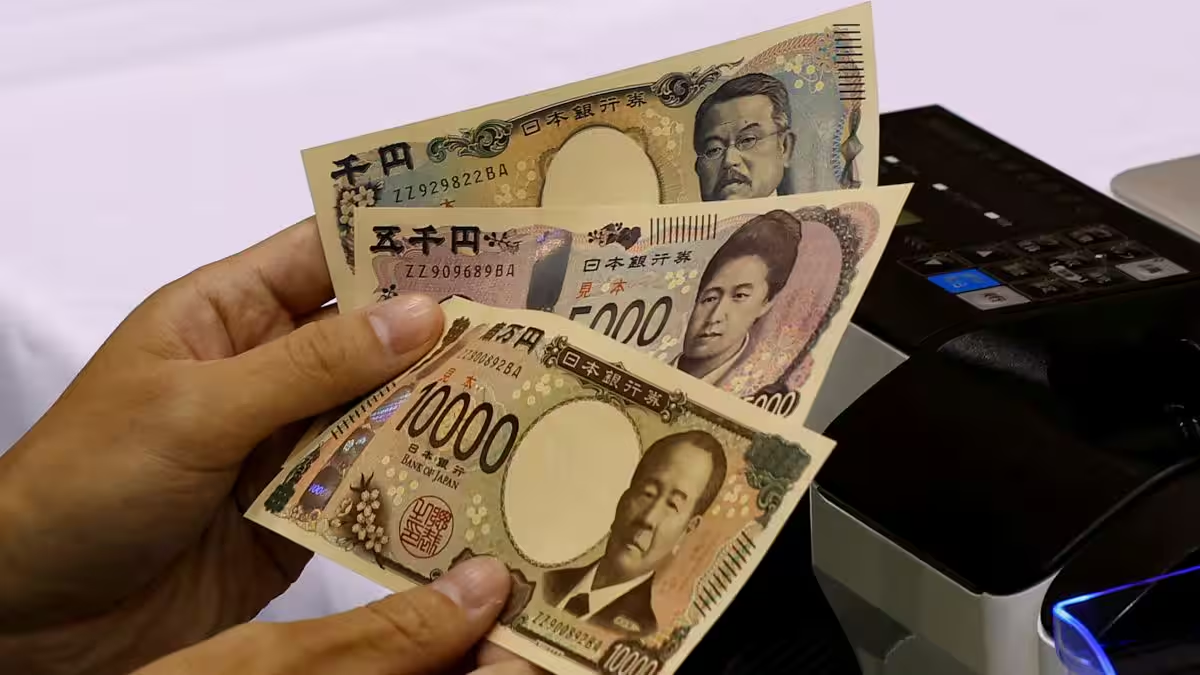
. The Japanese yen fell to a nearly 40-year low against the U.S. dollar, prompting the Japanese government to intervene again in the foreign exchange market. Finance Minister Satsuki Katayama said on Tuesday that Tokyo was ready to take “firm measures” if necessary.

Tensions in the Middle East, the interest rate differential between the US and Japan and long-term monetary policy have put pressure on the yen.TAG_OPEN_div_26 After talks with US Treasury Secretary Scott Besant, Katayama said Japan and the US agreed to take “decisive action” if necessary.

After the talks confirmed by the Japanese government, there are signs that Japan is ready to intervene again. Tokyo spent more than $70 billion to support the yen last month.

Japan’s currency, which fell to 161.93 yen against the dollar on Monday, recovered slightly to trade at 161.60 yen per dollar on the Tokyo market on Tuesday.TAG_OPEN_div_22 This is one of the weakest exchange rates seen since December 1996. In 2011, the price of one dollar was about 75 yen.

The weak yen has pushed up import costs for Japan, which is dependent on energy and raw material imports. The price of petroleum products, especially those traded in dollars, has put more pressure on the domestic economy. On the other hand, the weak yen has made shopping, hotel and dining in Japan cheaper for foreign tourists, resulting in significant growth in the tourism sector.

Michael Wan, an analyst at MUFG, said Japan’s real interest rate differential relative to the United States needs to narrow for long-term recovery.TAG_OPEN_div_18 He said that the yen can only be strengthened permanently if the Bank of Japan gives a clear signal of adopting a more aggressive monetary policy.

The Bank of TAG_OPEN_div_16 Japan (BPC) raised interest rates to their highest level in 31 years last week. At the same time, the US Federal Reserve has also indicated that it will adopt more tight monetary policy, and that interest rates may rise again this year.

However, analysts say the Bank of Japan raises interest rates further could lead to resistance from the government led by Prime Minister Sane-Takaechi.TAG_OPEN_div_14 The government is taking precautions to tighten further, amid concerns that higher borrowing costs could hurt economic growth.

Prabhu
sikhar insurance

प्रतिक्रिया दिनुहोस्

dish home
national life
http://sanimareliancelife.com/
MAK 4T
Arghakhachi
Gili